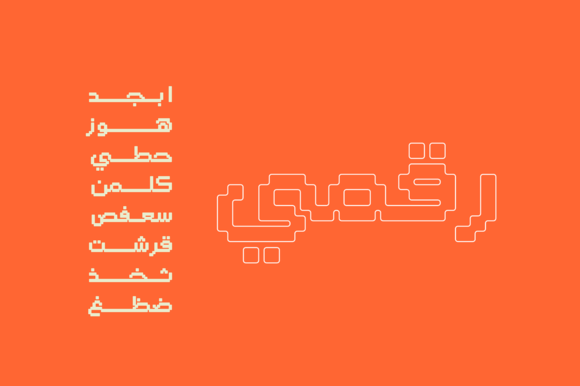
Raqami: The Digital Arabic Font for Modern Design
If you're looking for a font that brings a modern, pixelated aesthetic to Arabic text, Raqami is worth considering. This unique display font blends digital and traditional elements, making it ideal for creative projects that need a fresh look. Whether you're working on web design, print ads, or branding materials, Raqami can add a distinctive visual flair.
What Makes Raqami Stand Out
Raqami isn't just another Arabic font—it's a statement. Its pixelated design gives it a retro, tech-inspired vibe that stands out in both digital and physical formats. Unlike more traditional Arabic typefaces, which often emphasize elegance and flow, Raqami leans into a bold, stylized approach. This makes it perfect for projects that want to evoke a sense of digital innovation or nostalgia for early computer graphics.
The font’s structure is clean but not overly rigid. Each character has a slightly rough edge, as if it were rendered on a low-resolution screen. This detail adds character and can be especially effective when used in headlines, logos, or other visual elements where impact matters.
Real-World Applications of Raqami
Designers and developers often turn to Raqami when they need a font that breaks the mold. For example, in web design, it can be used for site headers, call-to-action buttons, or interactive elements that aim to grab attention. Its pixelated look works well with minimalist layouts, where simplicity is key but visual interest is still needed.
In print advertising, Raqami can help create a striking contrast against more conventional fonts. Imagine a billboard promoting a tech startup—using Raqami for the headline could immediately signal a forward-thinking brand. Similarly, in magazine spreads or brochures, it can serve as a focal point that draws readers in without overwhelming them.
For mobile app designers, Raqami offers an opportunity to inject personality into user interfaces. It might not be suitable for body text due to its size and style, but as a logo or icon label, it can make a strong impression. This is especially useful for apps targeting younger audiences who appreciate a more playful or edgy aesthetic.
Who Benefits from Using Raqami?
Raqami appeals to a wide range of users, from graphic designers to content creators. If you're working on a project that requires a unique visual identity, this font can be a valuable tool. For instance, independent artists or small businesses looking to stand out in crowded markets may find Raqami useful for branding their work.
Web developers also benefit from its versatility. When paired with other fonts, Raqami can add depth and variety to a website’s typography. It works particularly well in combination with sans-serif or monospace fonts, creating a balanced yet dynamic visual hierarchy.
Additionally, educators or presenters who want to make their slides more engaging might consider using Raqami for titles or key points. Its distinct appearance can help reinforce a message or theme, making the content more memorable.
Considerations Before Using Raqami
Before installing and using Raqami, it's important to check your operating system's support for Arabic language. Some systems may require additional configuration to properly display or render the font. This is especially true for older versions of Windows or macOS, where language settings can affect how certain fonts are handled.
Another consideration is readability. While Raqami is visually appealing, it may not be the best choice for long blocks of text. Its pixelated style is more suited for short phrases or decorative purposes rather than extended reading. Users should test the font in different contexts to ensure it meets their needs.
Also, keep in mind that not all design software supports Arabic fonts equally. Programs like Adobe Photoshop, Illustrator, or Figma may have varying levels of compatibility. It's a good idea to preview the font in your preferred tools before committing to a project.
Strengths and Limitations of Raqami
Raqami’s greatest strength lies in its ability to convey a specific mood or tone. Its pixelated look can instantly communicate a sense of digital culture, making it ideal for tech-related projects. It also adds a level of uniqueness that can set a design apart from others.
However, this same uniqueness can be a limitation. In some cases, the font may not blend well with more traditional designs. It's important to use it intentionally and with a clear purpose. Overuse or improper application can dilute its impact and make the overall design feel cluttered.
Despite these limitations, Raqami remains a powerful tool for those looking to experiment with typography. Its ability to merge modern and retro aesthetics makes it a versatile choice for a variety of creative fields.